The 6 Best ADHD Apps in 2026: A Complete Comparison
Finding the "best" ADHD app is a myth. ADHD is highly individual�what works perfectly for someone who struggles with time blindness might be absolutely useless for someone whose primary challenge is task paralysis.
Instead of declaring one app the absolute winner for everyone, we've broken down the top productivity apps of 2026 based on their best use cases.
Whether you need AI to plan your day, a digital pet to motivate you, or a simple tool to break down overwhelming tasks, here is an objective, honest comparison of the best ADHD apps available today.
Quick Comparison Overview
| App | Best For | Core Strength |
|---|---|---|
| MindMint | AI Planning + ADHD Focus | Voice brain-dumps and gamified focus timers |
| Tiimo | Visual Planning | Highly visual, color-coded daily schedules |
| Goblin Tools | Breaking Down Tasks | AI that turns overwhelming tasks into micro-steps |
| Finch | Habits & Self-Care | Gamified self-care through a virtual pet |
| Brain.fm | Focus Audio | Scientifically backed background music for deep work |
| Todoist | General Task Management | Fast, clean, traditional list-making |
1. MindMint: Best for AI-Powered Planning & All-in-One Focus
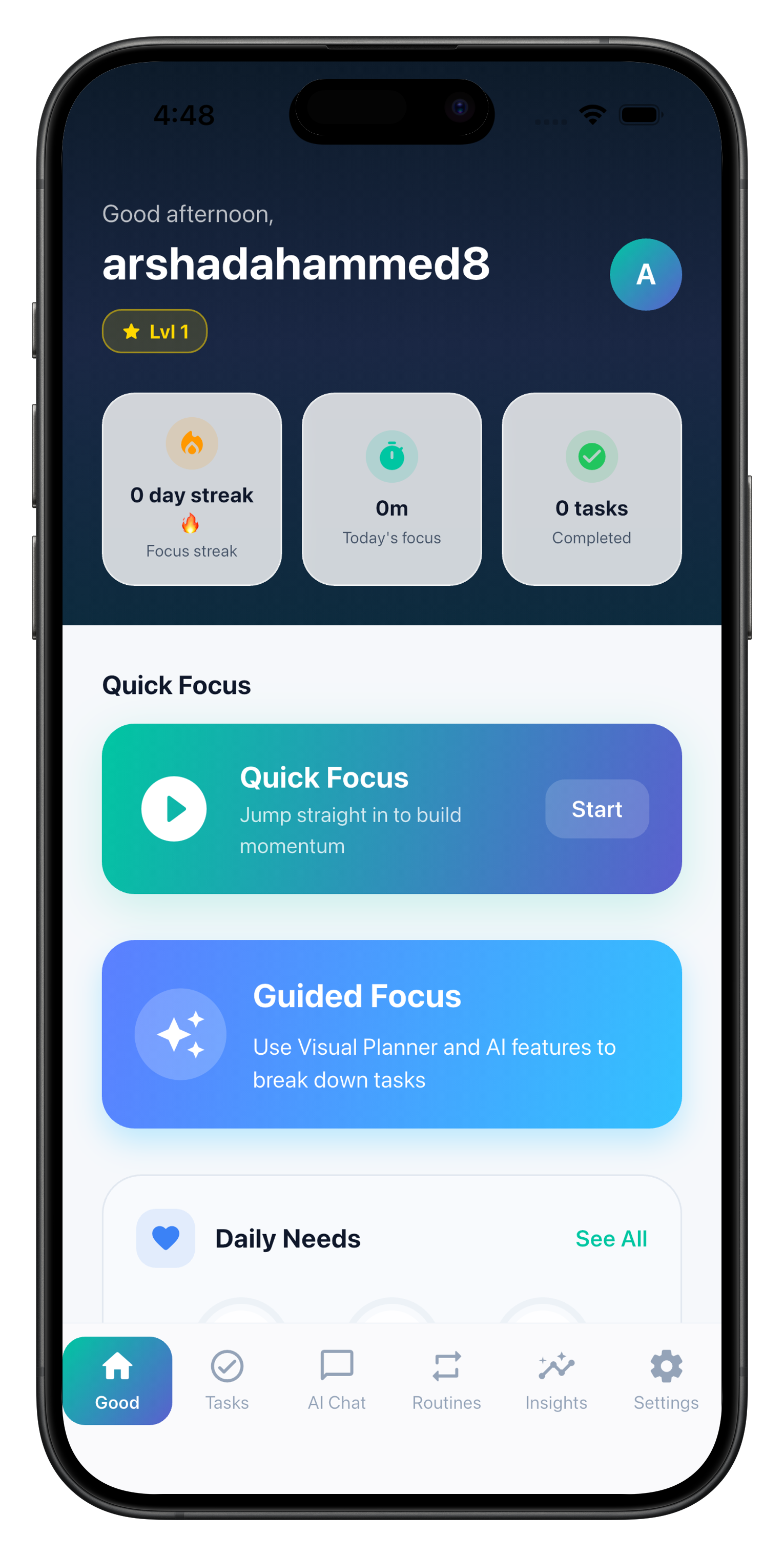
If you struggle with the cognitive load of organizing your thoughts and prioritizing what to do first, MindMint is designed to do the heavy lifting for you. It's a comprehensive ADHD focus assistant rather than just a simple to-do list.
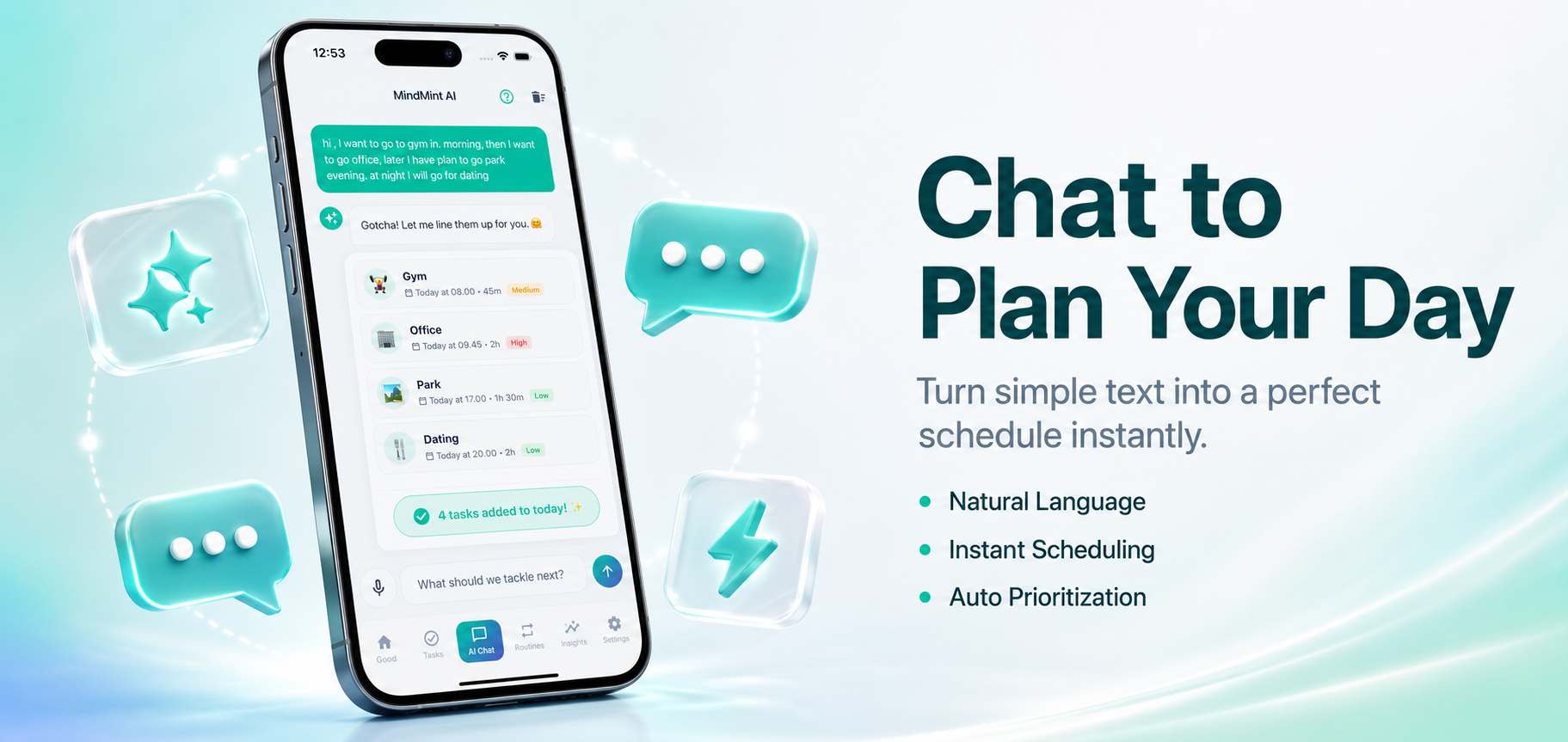
Why it works for ADHD:
- Voice Brain Dumps: You can ramble your thoughts into the app, and the AI will extract your tasks, prioritize them, and build a schedule.
- Task Roulette: When you have severe decision fatigue, you can spin the "Task Roulette" wheel to let the app pick your next chore.
- All-in-One Dashboard: It combines habit tracking, focus timers, and to-do lists, reducing the "out of sight, out of mind" problem of switching between 5 different apps.
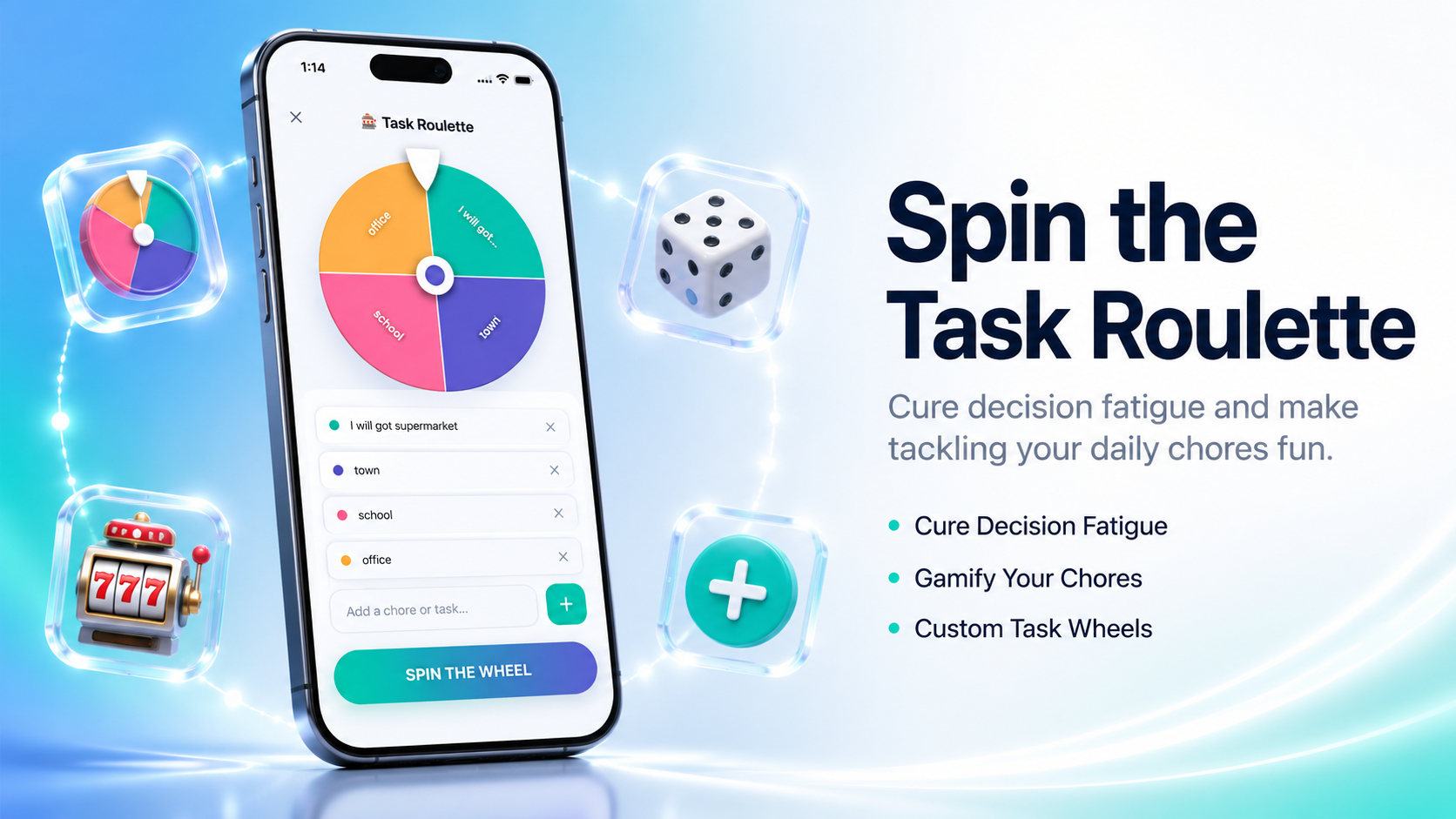
Who should use it: People who get overwhelmed by planning their day and need an app to prioritize and structure tasks for them. Who shouldn't use it: Android users (it's currently iOS exclusive) or people who just want a bare-bones digital notepad without extra features.
2. Tiimo: Best for Visual Planning & Routine Building
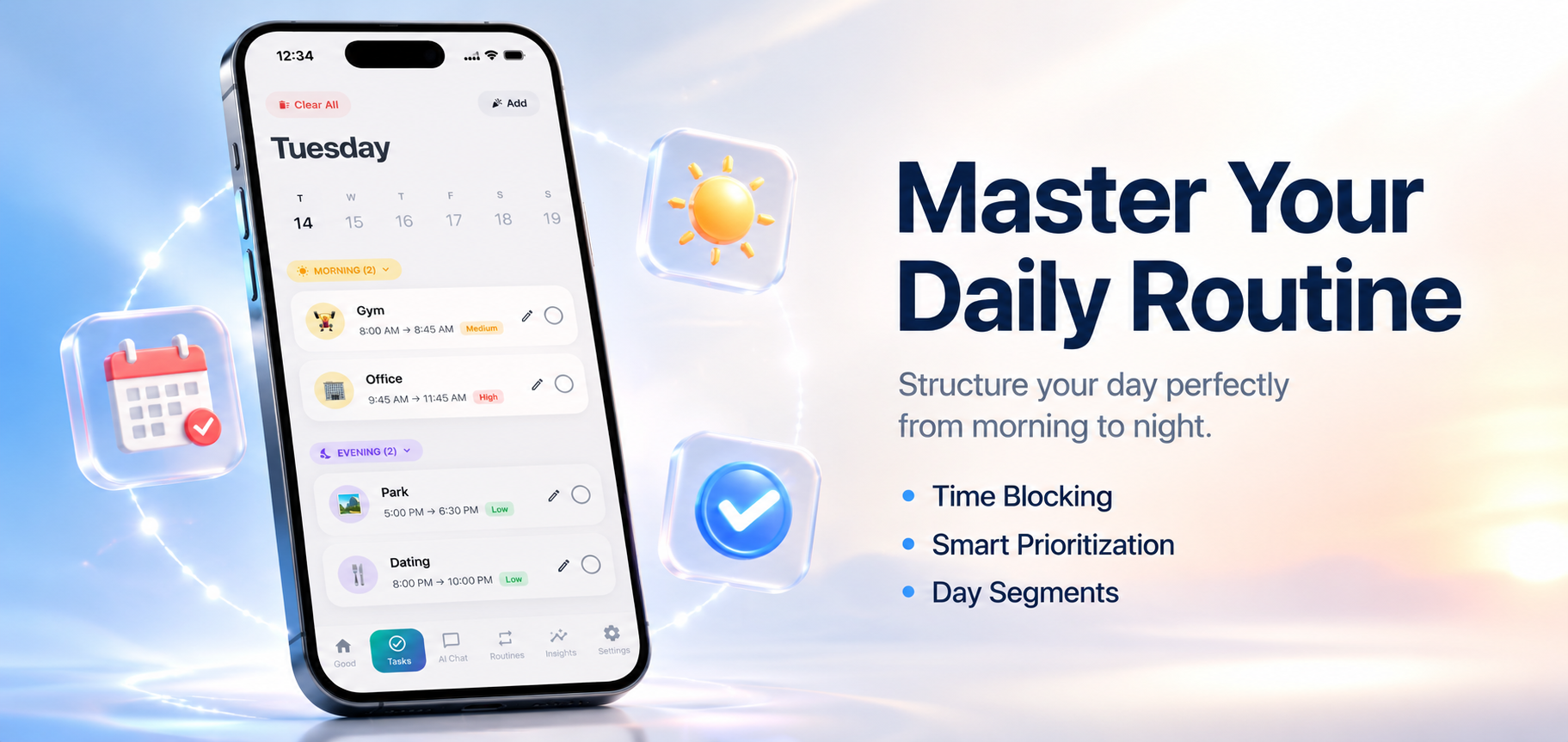
Tiimo is a deeply visual daily planner designed specifically for neurodivergent individuals. It focuses heavily on time blocking and routine adherence.
Why it works for ADHD:
- Hyper-Visual Interface: Uses colors and icons heavily, making your day easy to understand at a glance.
- Visual Timers: Shows time passing visually rather than just with numbers, which is a massive help for time blindness.
- Pre-built Routines: Offers a library of routines you can simply plug into your day without having to create them from scratch.
Who should use it: Visual thinkers who need help sticking to a structured morning or evening routine. Who shouldn't use it: People whose schedules change constantly or who feel claustrophobic when every hour of their day is blocked out.
3. Goblin Tools: Best for Breaking Down Overwhelming Tasks
Goblin Tools is a brilliant, single-purpose AI utility. Its primary feature, the "Magic ToDo," takes one large, intimidating task and breaks it down into tiny, actionable steps.
Why it works for ADHD:
- Cures Task Paralysis: If "Clean the kitchen" feels impossible, Goblin Tools will break it down into "Empty dishwasher," "Put away spices," etc., instantly lowering the barrier to entry.
- Tone Adjustment: It includes a "Judge" feature that helps you understand the tone of emails�great for those who struggle with Rejection Sensitive Dysphoria (RSD) or professional communication.
Who should use it: Anyone who regularly experiences the "wall of awful" when looking at big projects. Who shouldn't use it: People looking for a daily calendar or habit tracker�Goblin Tools is a utility, not a comprehensive life planner.
4. Finch: Best for Habits & Self-Care
Finch turns self-care into a game. You adopt a virtual pet bird, and the only way to help it grow and go on adventures is by completing your own real-life self-care tasks.
Why it works for ADHD:
- Dopamine Gamification: It hijacks the ADHD brain's love for gaming and virtual rewards and applies it to mundane tasks like drinking water or brushing your teeth.
- Low Pressure: It's incredibly forgiving. If you miss a day, your bird doesn't die; it's always just happy to see you return, removing the guilt associated with broken streaks.
Who should use it: People who struggle with basic hygiene, self-care routines, or need external, guilt-free motivation. Who shouldn't use it: Professionals looking for a tool to manage complex work projects or meetings.
5. Brain.fm: Best for Focus Audio
Brain.fm isn't a task manager; it's an auditory tool. It provides functional music scientifically engineered to help you focus, relax, or sleep.
Why it works for ADHD:
- Blocks Distractions: The music is designed to fade into the background while occupying the part of your brain that seeks distraction, allowing you to hyperfocus on your actual work.
- Fast Acting: Many users report getting into the "zone" within 10-15 minutes of putting their headphones on.
Who should use it: People who work in noisy environments or find that their brain needs background stimulation to concentrate. Who shouldn't use it: People who find any form of music or noise deeply distracting when reading or writing.
6. Todoist: Best for General Task Management
While not built specifically for ADHD, Todoist remains a powerhouse because of its speed and natural language processing.
Why it works for ADHD:
- Frictionless Entry: You can type "Buy groceries every Friday at 5pm," and it automatically schedules it. This prevents the "I'll write it down later" trap.
- Cross-Platform Integration: It integrates with virtually everything, meaning you can capture tasks from your email, browser, or phone instantly.
Who should use it: People with mild ADHD who just need a lightning-fast way to get tasks out of their head and onto a list. Who shouldn't use it: Those who need visual stimulation, as its interface is very text-heavy and traditional.
The Verdict: How to Choose
If you're trying to build a productivity system that actually works for your brain, you don't necessarily need to pick just one. Many people combine a utility like Brain.fm or Goblin Tools with a daily planner.
However, if you are looking for an all-in-one ADHD Focus Assistant that handles planning, gamifies your chores, and centralizes your habits, MindMint is the most powerful comprehensive tool in 2026.
By offloading the stressful parts of planning to AI and using features like the Task Roulette for a dopamine boost, MindMint allows you to spend less time organizing and more time actually doing.
Ready to see how AI can transform your focus? Try MindMint Today.