
Key Takeaways
- •Executive dysfunction is a neurological issue, not a moral failing or laziness.
- •It affects working memory, task initiation, emotional regulation, and planning.
- •The key to managing it is externalizing executive functions into physical systems and digital tools.
- •Lowering the barrier to entry is the best way to overcome task paralysis.
What is Executive Dysfunction?
Imagine a company with brilliant employees but no CEO. The workers know how to do their jobs, but there's no one to tell them what to do first, how to organize the project, or when to switch tasks. That's a brain experiencing executive dysfunction.
Executive functions are the cognitive processes that manage other brain functions. They are located primarily in the prefrontal cortex—the exact area of the brain that develops differently in individuals with ADHD.
When you desperately want to start a task, know exactly how to do it, realize the consequences of not doing it, yet remain glued to the couch scrolling on your phone—that is executive dysfunction, specifically 'task initiation paralysis.'
The Core Deficits
Executive dysfunction typically manifests in several specific areas:
Working Memory
The ability to hold information in mind while working with it. Example: Walking into a room and forgetting why you went in there, or struggling to follow multi-step instructions.
Task Initiation
The ability to begin a task independently. This is the 'invisible wall.' It feels physically impossible to transition from a resting state to a working state.
Emotional Regulation
The ability to manage frustration and modulate emotional responses. ADHD brains often experience emotions intensely and struggle to self-soothe.
Organization and Planning
The ability to foresee steps, prioritize them, and estimate time. This makes large projects feel like overwhelming, formless blobs of stress.
How to Bypass the Wall
You cannot willpower your way through executive dysfunction. You must build external systems to do the CEO's job for you.
Externalize Everything
Since your working memory is unreliable, put it in the physical world. Use visual timers (to see time passing), post-it notes (to see tasks), and physical objects (putting your keys in the exact same bowl every day).
The 'Just 5 Minutes' Rule
To bypass task initiation paralysis, commit to doing the task for only five minutes. You are allowed to stop after five minutes. Often, the hardest part is just starting, and once in motion, you'll stay in motion.
Use Scaffolding Software
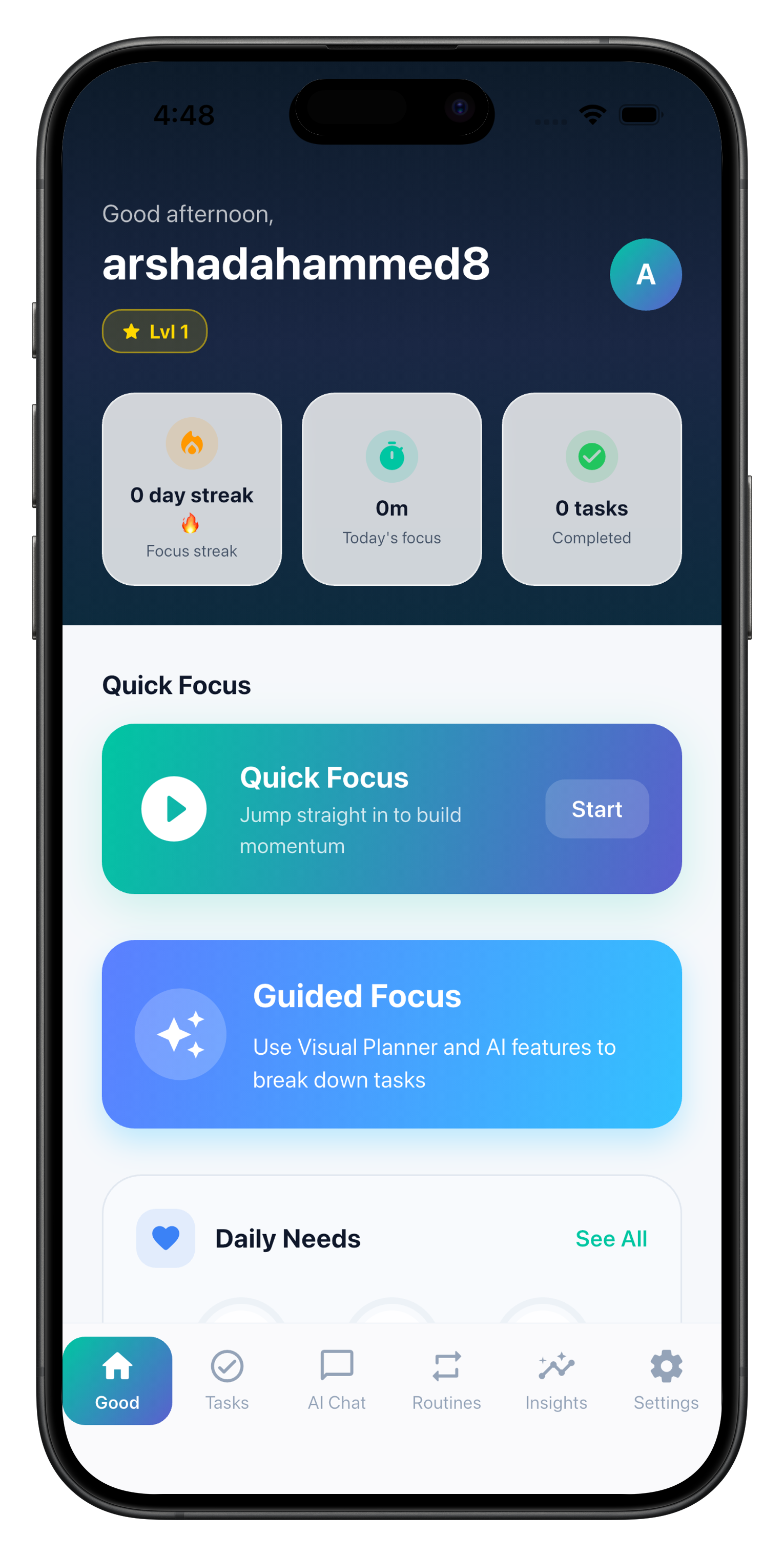
Tools like MindMint act as an external CEO. The AI breaks down the projects (handling Organization), builds the schedule (handling Planning), and provides gentle nudges (aiding Task Initiation).
Ready to Take Control of Your Day?
Join thousands of ADHD minds using MindMint to transform scattered thoughts into structured, productive days. Start for free today.
Frequently Asked Questions
Is executive dysfunction the same as ADHD?
Not exactly. Executive dysfunction is a symptom. Everyone with ADHD has executive dysfunction, but you can also experience executive dysfunction due to depression, anxiety, autism, brain injury, or severe sleep deprivation.
How do I explain this to my neurotypical boss or partner?
Use the 'CEO analogy' or compare it to a car with a powerful engine but a broken starter motor. Emphasize that the desire and capability to do the work are there, but the neurological mechanism to initiate the action is impaired.